Table of Contents
Attic ventilation is a system, not a single component. Understanding the different types of vents—and how they work together—is essential for keeping your Florida roof healthy and your energy bills manageable. This comprehensive guide compares all major ventilation types and helps you determine the best combination for your home.
The Ventilation System
Before comparing vent types, understand how the system works.
The Basic Principle
Effective attic ventilation requires:
- Intake vents (low on the roof) where cool air enters
- Exhaust vents (high on the roof) where hot air exits
- Airflow path connecting them through the attic
- Balance between intake and exhaust capacity
Hot air naturally rises and exits through exhaust vents, drawing cooler air in through intake vents. This continuous cycle removes heat and moisture from the attic.
Why Balance Matters
The system only works when balanced:
- Too little intake: Exhaust vents can't draw air efficiently
- Too little exhaust: Hot air has nowhere to go
- Mismatched systems: Competing exhaust vents fight each other
For more on why ventilation matters, see our attic ventilation guide.
Intake Ventilation Types
Intake vents allow outside air to enter the attic at low points.
Soffit Vents
The most common and effective intake solution.
Continuous Soffit Vents:
- Perforated material runs entire soffit length
- Maximum intake area
- Clean appearance
- Best option for adequate intake
Individual Soffit Vents:
- Circular or rectangular vents spaced along soffit
- Less total area than continuous
- Adequate for smaller homes
- Easier to retrofit
Important Considerations:
- Must not be blocked by insulation
- Baffles should keep insulation clear
- Paint can clog perforations (careful when painting)
- Calculate total free area for sizing
Drip Edge Vents
Intake ventilation integrated with drip edge.
How They Work:
- Air enters at roof edge
- Built into drip edge flashing
- Used when soffit space is limited
Best For:
- Homes without traditional soffits
- Cathedral ceilings
- Low-slope roofs
Under-Eave Vents
Vents installed in the vertical fascia area.
Characteristics:
- Alternative when soffit isn't available
- Less effective than soffit vents
- May allow water intrusion in heavy rain
Exhaust Ventilation Types
Exhaust vents allow hot air to exit at high points on the roof.
Ridge Vents
Continuous venting along the roof peak—the gold standard for most homes.
How They Work:
- Slot cut along roof ridge
- Covered by vent cap and shingles
- Hot air exits along entire ridge length
- External baffles create negative pressure in wind
Advantages:
- Even ventilation across entire attic
- Nearly invisible from ground
- No moving parts to fail
- Works in any weather
- Hurricane-resistant (low profile)
Disadvantages:
- Requires adequate ridge length
- Best installed during re-roofing
- Hip roofs have limited ridge
- Requires matching soffit intake
Florida Rating: Excellent—preferred choice for most Florida homes.
Box Vents (Static Vents)
Individual vents installed near the ridge.
How They Work:
- Box-shaped vents protrude from roof
- Hot air exits through openings
- Multiple units needed for coverage
Advantages:
- Easy to add to existing roofs
- No moving parts
- Can place where needed
- Lower cost per unit
Disadvantages:
- Visible on roof
- May need many units
- Uneven ventilation if poorly placed
- Higher profile than ridge vents
Florida Rating: Good—works well when ridge vents aren't practical.
For a detailed comparison, see our ridge vent vs box vent guide.
Turbine Vents (Whirlybirds)
Wind-powered spinning vents.
How They Work:
- Wind spins the turbine
- Spinning creates suction effect
- Actively pulls hot air out
Advantages:
- Active ventilation when wind blows
- No electricity needed
- Visible operation (you know it's working)
- Can supplement other exhaust
Disadvantages:
- Dependent on wind
- Moving parts wear out
- Can be noisy when bearings fail
- Hurricane vulnerability
- Visible on roof
Florida Rating: Acceptable—works but ridge vents preferred for most applications.
See our ridge vent vs turbine comparison for more details.
Power Vents (Electric Fans)
Electrically powered exhaust fans.
How They Work:
- Motor-driven fan
- Thermostat or humidistat controlled
- Actively exhausts hot air
Advantages:
- Doesn't depend on wind
- Can move large volumes of air
- Good for problem attics
- Adjustable to conditions
Disadvantages:
- Uses electricity (ongoing cost)
- Motors fail and need replacement
- Can create negative pressure problems
- May draw conditioned air from house if intake is inadequate
- Fire risk if not properly maintained
Florida Rating: Situational—can help problem attics but has risks.
Solar Power Vents
Solar-powered exhaust fans.
How They Work:
- Solar panel powers fan
- Runs when sun shines
- Battery backup available on some models
Advantages:
- No operating cost
- Runs when you need it most (sunny days)
- Environmentally friendly
- No wiring needed
Disadvantages:
- Limited power output
- Doesn't run at night or cloudy days
- Moving parts still fail
- Higher initial cost
- Same negative pressure concerns as electric
Florida Rating: Good for supplementing passive systems in problem attics.
Gable Vents
Louvered vents in gable ends of attic.
How They Work:
- Air moves through horizontally
- Acts as intake or exhaust depending on wind
- Works with cross-ventilation
Advantages:
- No roof penetrations
- Easy to install in gable walls
- Visible for inspection
- Can add to existing homes easily
Disadvantages:
- Inconsistent airflow (wind-dependent direction)
- Only for homes with gables
- Less effective than ridge/soffit systems
- Should not be combined with ridge vents
Florida Rating: Supplement only—not recommended as primary exhaust.
Important: Combining gable vents with ridge vents can cause problems. The gable vent can short-circuit the system, pulling air in at the ridge instead of exhausting.
Choosing the Right Combination
Best System for Most Florida Homes
Ridge vents + continuous soffit vents
- Maximum ventilation effectiveness
- No moving parts
- Even airflow throughout attic
- Hurricane resistant
- Low maintenance
For Hip Roofs (Limited Ridge)
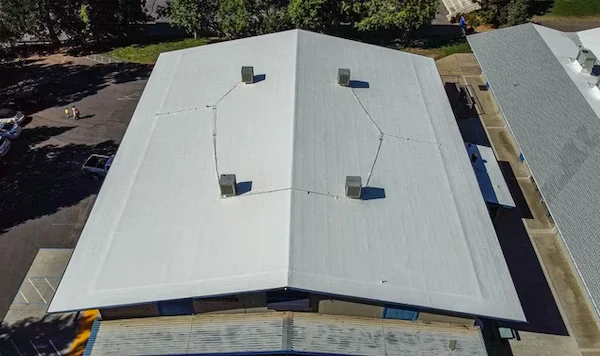
Box vents + continuous soffit vents
- Multiple box vents compensate for short ridge
- Place vents evenly across roof
- Ensure adequate total exhaust area
For Retrofit Situations
Add box vents or turbines + improve soffit vents
- Easier to add than ridge vent
- Can be done without re-roofing
- Focus on intake improvement too
For Problem Attics
Solar power vent + ridge or box vents + continuous soffit
- Solar boost during peak heat
- Passive vents work when solar doesn't
- Ensure ample soffit intake to avoid negative pressure
Sizing Your Ventilation
The 1:150 Rule
Standard ventilation requirement:
- 1 square foot of net free area per 150 square feet of attic floor
- Split evenly between intake and exhaust
Example for 1,500 sq ft attic:
- Total needed: 10 square feet (1,500 / 150)
- Intake: 5 square feet
- Exhaust: 5 square feet
The 1:300 Rule (with Vapor Barrier)
If you have vapor barrier between living space and attic:
- 1 square foot per 300 square feet
- Still split evenly between intake and exhaust
Net Free Area
Vent ratings show 'net free area'—the actual open space for airflow:
- Screens and louvers reduce free area
- Cheap vents may have less free area than advertised
- Calculate based on net free area, not vent size
Common Ventilation Problems
Blocked Soffit Vents
The most common problem we see:
- Insulation pushed against soffit
- Painted soffits with clogged perforations
- Debris accumulation
- Never installed or removed during renovation
Solution: Install baffles to keep insulation clear; clean or replace blocked soffits.
Mismatched Systems
Mixing exhaust types can cause problems:
- Ridge vent + gable vent: Gable short-circuits system
- Multiple exhaust types: Compete instead of cooperate
- Too much exhaust, too little intake: Pulls air wrong places
Solution: Choose one primary exhaust system with matched intake.
Inadequate Ventilation
Many homes simply don't have enough:
- Builder minimized vent installation
- Additions blocked existing vents
- Ventilation never upgraded when insulation added
Solution: Calculate requirements and add ventilation to meet them.
Power Vent Issues
Power vents can create problems:
- Drawing conditioned air from living space
- Creating negative pressure in attic
- Motor failures without homeowner knowledge
- Fire hazards from failed motors
Solution: If using power vents, ensure ample soffit intake (more than minimum).
Installation Considerations
During Roof Replacement
Best time to upgrade ventilation:
- Ridge vent installation is straightforward
- Drip edge vents can be added
- Old vents can be removed or integrated
- Minimal added cost compared to standalone project
Adding to Existing Roof
Improvements possible without re-roofing:
- Add box vents or turbines
- Install or replace soffit vents
- Add solar power vents
- Clear blocked soffits
Florida Code Requirements
Florida Building Code mandates:
- Minimum ventilation ratios
- Cross-ventilation for attic spaces
- Compliance verified during inspections
- Enhanced requirements in HVHZ
Ventilation and Energy Efficiency
Working with Insulation
Ventilation and insulation work together:
- Ventilation removes heat that insulation can't stop
- Insulation slows conducted heat; ventilation removes it
- Neither alone is as effective as both together
Working with Radiant Barriers
If you have or plan to install radiant barriers:
- Maintain ventilation airflow along roof deck
- Don't seal off ventilation paths
- Radiant barrier + ventilation = very effective
Impact on Cooling Costs
Proper ventilation typically reduces cooling costs by:
- 10-15% in poorly ventilated homes
- Less dramatic improvement in already well-ventilated homes
- Most impactful when combined with insulation and air sealing
Get Professional Assessment
At Pro Specialty Services, we evaluate attic ventilation as part of every roof inspection. We can calculate your ventilation requirements, identify problems with existing systems, and recommend cost-effective improvements.
We offer attic ventilation services including ridge vent installation, soffit vent improvements, and complete ventilation system upgrades.
Contact us for an assessment of your attic ventilation. We'll help you understand your current situation and find the most effective solution for your Florida home.
Caleb Hutchinson
Owner, Pro Specialty Services
"I've crawled through thousands of attics in Florida, and ventilation problems are extremely common. The worst I see is homes with ridge vents installed but blocked soffits—the system can't work without intake. Second most common is mixing ridge vents with gable vents, which actually makes ventilation worse. The solution is almost always simple once you understand how the system works: intake at the bottom, exhaust at the top, and a clear path between them."
![Ridge Vent vs Box Vent: Complete Comparison for Florida Roofs [2026]](/images/serviceHeroes/spray-foam-roofing/3.webp)