Table of Contents
Flat and low-slope roofs present unique challenges compared to pitched residential roofs. Water doesn't shed as quickly, UV exposure is more direct, and ponding water can degrade materials. Choosing the right flat roof system is critical for longevity and performance—especially in Florida's climate of intense sun, heavy rain, and occasional hurricanes. This comprehensive guide compares the most popular flat roofing materials to help you make an informed decision for your commercial building, home addition, or low-slope application.
Understanding Flat Roof Requirements
Before diving into specific materials, it's important to understand what makes a flat roof system successful in Florida:
Water Management
Despite the name, truly flat roofs are rare. Properly designed low-slope roofs have minimal pitch (1/4 inch to 1/2 inch per foot) to direct water to drains or scuppers. The roofing membrane must create a seamless, waterproof barrier since water moves slowly and can pool.
UV Resistance
Flat roofs receive maximum UV exposure with no shade from overhangs or nearby surfaces. Materials must resist UV degradation, maintain flexibility despite heat cycling, and ideally reflect solar radiation to reduce heat buildup.
Seam Integrity
Most flat roofing systems use large sheets or rolls joined together. The seams are the weakest point in any system. Superior seaming methods (heat welding vs. adhesive) dramatically affect long-term performance.
Puncture Resistance
Flat roofs are more accessible than pitched roofs, meaning more foot traffic for HVAC maintenance, satellite dishes, and other equipment. Materials must resist punctures from impact and traffic.
TPO (Thermoplastic Polyolefin): The Modern Standard
TPO has become the most popular single-ply roofing membrane for commercial and residential flat roof applications, combining performance with moderate cost.
How TPO Works
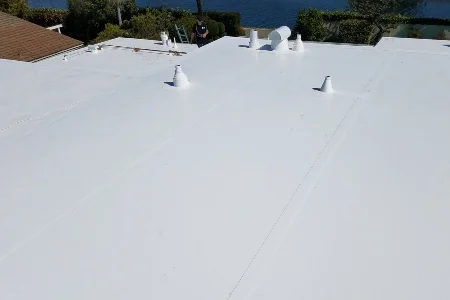
TPO is a single-ply membrane (typically 45-80 mil thick) made from thermoplastic polyolefin polymers. It's installed in large sheets that are mechanically fastened or fully adhered to the roof deck, with seams heat-welded together using hot air guns. The result is a monolithic, seamless membrane.
Pros of TPO Roofing
Superior Energy Efficiency: White TPO reflects 70-85% of solar radiation, earning ENERGY STAR ratings. This dramatically reduces cooling costs—a major benefit in Florida. Roof surface temperatures can be 50-60°F cooler than black EPDM or asphalt.
Excellent Seam Strength: Heat-welded seams create molecular bonds stronger than the membrane itself. When properly welded, seams don't fail—membrane tears occur elsewhere first. This is TPO's biggest advantage over glued seam systems.
Chemical and Oil Resistance: TPO resists oils, fats, and many chemicals better than EPDM. Important for restaurant applications or roofs near kitchen exhaust vents.
Flexibility: Remains flexible in both hot and cold temperatures, accommodating building movement and thermal expansion without cracking.
Fire Resistance: Class A fire-rated (highest rating) when used with proper underlayment.
Moderate Cost: More expensive than EPDM but less than PVC, TPO offers excellent value for its performance characteristics.
Low Maintenance: Resistant to algae, mold, and punctures. Minimal maintenance beyond periodic inspections and keeping drains clear.
Cons of TPO Roofing
Newer Material History: TPO has only been widely used since the 1990s. Early formulations had issues with seam failures and premature cracking. Modern TPO is vastly improved, but it lacks the 40+ year track record of EPDM.
Quality Variations: Not all TPO is equal. Lower-cost products may use inferior polymer blends that degrade faster. Stick with established manufacturers like GAF, Firestone, Carlisle, and GenFlex.
Installation Expertise Required: Proper heat welding requires skill and the right equipment. Poor welding is a primary failure point. Hire experienced TPO roofing installers with manufacturer certifications.
Limited Color Options: TPO is primarily available in white or light gray. Limited aesthetic choices compared to some other materials (though white is the best choice for Florida anyway).
TPO Cost
- Material and labor installed: $5.50-$8.50 per square foot
- Typical 2,000 sq ft flat roof: $11,000-$17,000
Higher-end costs include thicker membranes (60-80 mil), fully adhered systems, and complex details.
TPO Lifespan in Florida
Expected lifespan: 20-30 years with proper installation and maintenance. Premium TPO from top manufacturers with expert installation can approach 30 years. Budget products or poor installation may only reach 15-20 years.
Best Applications for TPO
- Commercial flat roofs prioritizing energy efficiency
- Restaurant or food service applications (grease resistance)
- Residential additions, porches, or flat sections
- Budget-conscious projects requiring quality performance
- Any application where cooling cost reduction is a priority
EPDM Rubber Roofing: The Proven Performer
EPDM (Ethylene Propylene Diene Monomer) rubber roofing has been the workhorse of commercial flat roofing since the 1960s. Its long track record and reliability make it a safe choice.
How EPDM Works
EPDM is a synthetic rubber membrane available in 45-90 mil thickness. It comes in large rolls (up to 50 feet wide and 200 feet long) that minimize seams. The membrane is mechanically fastened, ballasted, or fully adhered to the roof deck. Seams are joined using liquid adhesives or tape primers.
Pros of EPDM Roofing
Proven Track Record: 40+ years of real-world performance data. EPDM roofs installed in the 1980s are still functioning—testament to the material's durability.
Weather Resistance: Excellent resistance to UV, ozone, and weathering. Remains flexible in temperature extremes from -40°F to 300°F (though Florida never tests those limits).
Easy Repair: EPDM repairs are straightforward. Patches adhere well and can be made by most qualified roofers. Replacement materials are widely available.
Lower Cost: Typically the least expensive single-ply membrane option. Good choice for budget-conscious projects not prioritizing energy efficiency.
Large Sheet Sizes: Fewer seams mean fewer potential failure points. Some roofs can be completed with a single sheet and no field seams.
Versatile Installation: Can be mechanically attached, fully adhered, or ballasted with gravel or pavers. Multiple methods accommodate different deck types and budgets.
Puncture Resistance: EPDM is tougher than TPO or PVC. Better withstands foot traffic and impact from hail or debris.
Cons of EPDM Roofing
Poor Energy Efficiency: Standard EPDM is black, absorbing 85-90% of solar radiation. This increases roof surface temperatures by 50-80°F compared to white TPO, dramatically raising cooling costs. White EPDM is available but costs more and is less durable than black.
Seam Vulnerability: Adhesive-bonded seams are the weak point in EPDM systems. Over time, adhesives can degrade, allowing seams to separate. Heat-welded TPO seams are superior.
Susceptible to Punctures from Inside: Sharp objects (screws, nails) can puncture EPDM more easily than TPO during installation or subsequent work. Once installed, it's durable, but care is needed during construction.
Shrinkage: EPDM can shrink slightly over time, stressing seams and fasteners. Quality installations account for this, but it's a consideration.
EPDM Cost
- Material and labor installed: $4.50-$7.00 per square foot
- Typical 2,000 sq ft flat roof: $9,000-$14,000
EPDM is generally 10-20% less expensive than comparable TPO systems.
EPDM Lifespan in Florida
Expected lifespan: 20-25 years for quality systems. Some EPDM roofs reach 30+ years, but Florida's intense UV can reduce lifespan compared to northern climates. Black EPDM experiences more thermal cycling (heating/cooling) than reflective materials, which can accelerate aging.
Best Applications for EPDM
- Budget-conscious commercial projects where energy efficiency is secondary
- Roofs with minimal seams (large simple shapes)
- Applications where black roofing is acceptable or preferred
- Roof areas with high foot traffic requiring durability
- Shaded roofs where solar heat gain isn't a concern
Learn more in our comprehensive guide to EPDM rubber roofing systems.
Modified Bitumen: The Built-Up Alternative
Modified bitumen (mod-bit) roofing is an evolution of traditional built-up roofing (BUR), combining asphalt with polymer modifiers for improved performance.
How Modified Bitumen Works
Modified bitumen systems use rolls of asphalt-based material reinforced with fiberglass or polyester mats. The asphalt is modified with either APP (atactic polypropylene) or SBP (styrene-butadiene-styrene) polymers for enhanced flexibility and durability. Installation involves torch-applying (melting the bottom layer to adhere to the roof), hot-mopping, or cold-applying with adhesives. Most systems use multiple layers for redundancy.
Pros of Modified Bitumen
Multi-Layer Redundancy: Two or more layers provide backup protection. If the top layer develops a small leak, the lower layer often prevents water infiltration—giving you time to make repairs.
Self-Sealing Properties: Small punctures often self-seal due to the asphalt's properties, especially in hot weather.
Good Puncture Resistance: Multiple layers and reinforcement provide excellent resistance to impacts and traffic.
Proven Technology: Modified bitumen has a 40+ year track record as an improvement over traditional built-up roofing.
Granulated Surface Options: Available with granulated surfaces similar to shingles, providing UV protection and some reflectivity (though not as effective as white TPO).
Cons of Modified Bitumen
Installation Fire Hazard: Torch-applied systems use propane torches to melt and adhere the material. This creates fire risk and requires experienced installers. Cold-applied systems avoid this but are more expensive.
Heavy: Multi-layer systems add significant weight—10-15 pounds per square foot. Not all roof structures can support this load.
Heat Absorption: Most modified bitumen is dark colored, absorbing solar heat. Granulated or coated white surfaces help but still aren't as reflective as TPO or PVC.
More Difficult Repairs: Repairing modified bitumen requires more expertise than single-ply membranes. You often need to cut out and torch-in a patch.
Shorter Lifespan Than Single-Ply: While durable, modified bitumen typically doesn't last as long as quality TPO or EPDM systems in Florida's UV-intense environment.
Modified Bitumen Cost
- Material and labor installed: $5.00-$8.50 per square foot
- Typical 2,000 sq ft flat roof: $10,000-$17,000
Multi-ply systems and specialty applications cost toward the higher end.
Modified Bitumen Lifespan in Florida
Expected lifespan: 15-20 years. Granulated cap sheets with UV protection can reach 20-25 years with proper maintenance. The intense Florida sun accelerates degradation of asphalt-based products.
Best Applications for Modified Bitumen
- Roofs requiring high puncture resistance (equipment platforms, high traffic areas)
- Applications where multi-layer redundancy provides peace of mind
- Retrofit over existing built-up roofing
- Commercial buildings where traditional aesthetics are preferred
- Situations where cold-process installation (no torches) is required
PVC (Polyvinyl Chloride): The Premium Option
PVC roofing is the premium single-ply membrane, offering the highest performance and longest lifespan—at the highest cost.
How PVC Works
PVC membranes (typically 50-80 mil) are installed similarly to TPO—mechanically fastened or fully adhered with heat-welded seams. The chemistry differs from TPO, providing enhanced durability and chemical resistance.
Pros of PVC Roofing
Longest Lifespan: Quality PVC systems can last 25-35+ years in Florida. Some commercial PVC roofs installed in the 1970s are still functioning.
Superior Chemical Resistance: The best choice for roofs exposed to oils, greases, and chemicals. Ideal for restaurants, manufacturing, or facilities with rooftop equipment that may leak fluids.
Excellent Fire Resistance: Inherently fire-resistant (doesn't support combustion). Class A fire-rated without additional underlayment.
Strong Seams: Heat-welded seams like TPO, providing superior seam strength over adhesive systems.
Energy Efficiency: White PVC reflects 75-85% of solar radiation, similar to TPO. Reduces cooling costs significantly.
Puncture and Tear Resistance: More resistant to punctures and tears than TPO or EPDM. Excellent for high-traffic roofs.
Cons of PVC Roofing
Highest Cost: PVC costs 20-40% more than TPO and 30-50% more than EPDM. The premium is justified by longevity and performance, but upfront cost is a barrier for budget-conscious projects.
Plasticizer Migration: Early PVC formulations had issues with plasticizers leaching out, causing the membrane to become brittle. Modern formulations have largely solved this, but it remains a consideration.
Shrinkage: Like EPDM, PVC can shrink slightly over time. Proper installation techniques accommodate this.
PVC Cost
- Material and labor installed: $7.00-$11.00 per square foot
- Typical 2,000 sq ft flat roof: $14,000-$22,000
PVC Lifespan in Florida
Expected lifespan: 25-35 years with quality installation. This is the longest-lasting single-ply membrane option for Florida applications.
Best Applications for PVC
- High-end commercial buildings where longevity justifies premium cost
- Restaurant or food service roofs requiring chemical resistance
- Roofs with high foot traffic or heavy equipment
- Long-term ownership situations where lifecycle cost matters more than upfront cost
- Applications requiring maximum fire resistance
Built-Up Roofing (BUR): The Traditional Choice
Built-up roofing is the original multi-ply flat roof system, using alternating layers of asphalt and reinforcing fabric.
How BUR Works
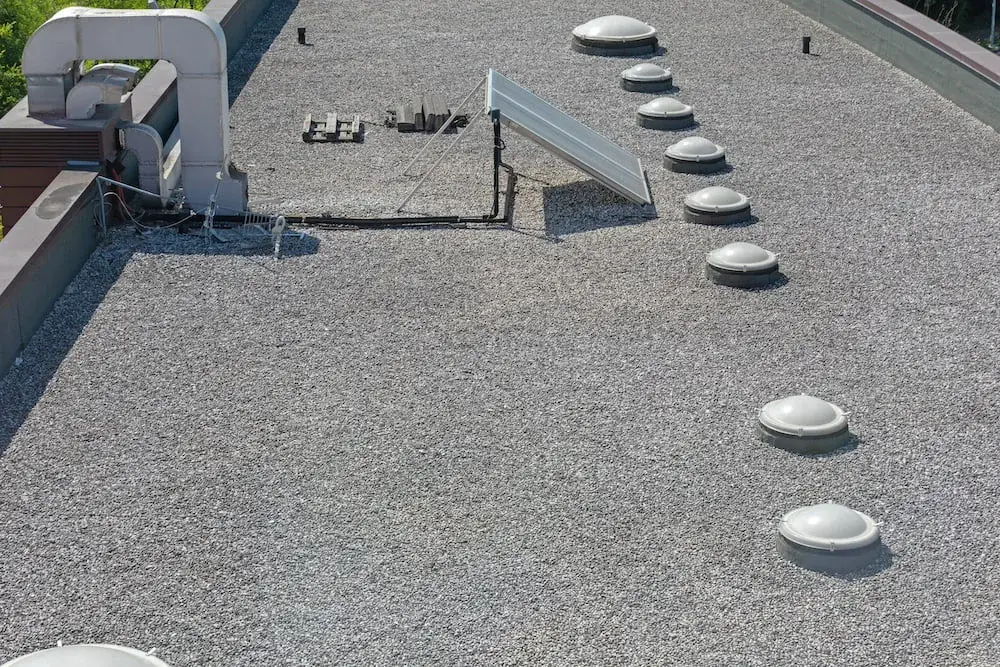
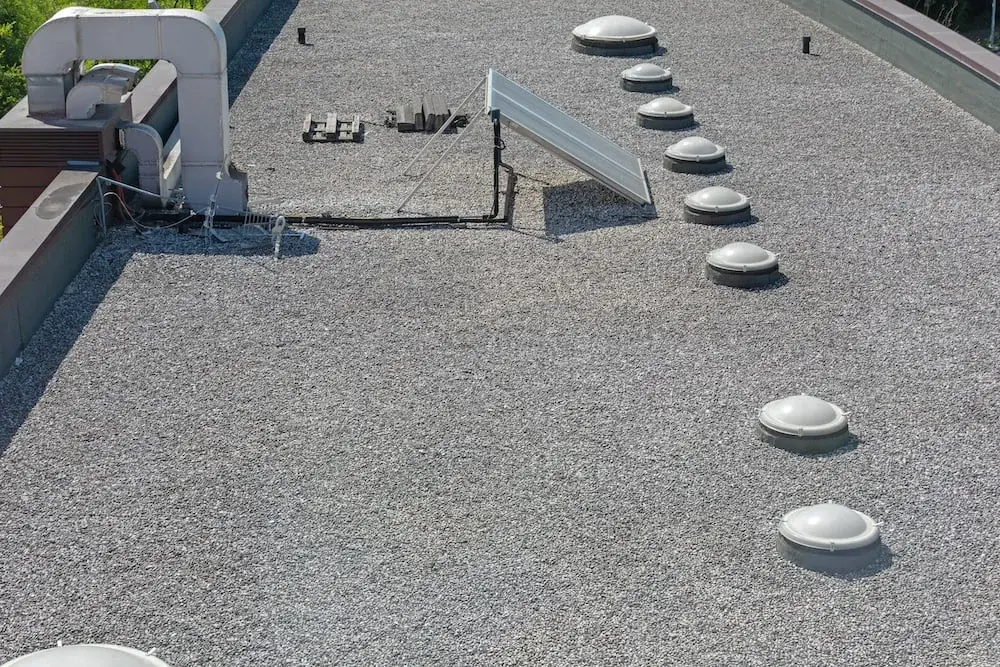
BUR systems build up the roof with multiple layers (plies) of roofing felt or fiberglass mat saturated with hot asphalt. Layers are topped with gravel or a mineral cap sheet for UV protection. The result is a thick, durable membrane.
Pros and Cons
Pros: Extremely durable, multi-layer redundancy, proven 100+ year track record, excellent puncture resistance.
Cons: Heavy (15-20 lbs per square foot), messy installation with hot asphalt, toxic fumes during installation, poor energy efficiency (dark surface), shorter lifespan than modern single-ply systems (15-20 years in Florida).
Why BUR is Less Common Today
BUR has largely been replaced by modified bitumen and single-ply membranes that offer similar or better performance with easier installation, lighter weight, and better energy efficiency. It's still used in some commercial applications but is rarely the best choice for new construction in Florida.
Florida Climate Considerations
Florida's unique climate influences which flat roofing material performs best:
UV Exposure
Central Florida receives among the most intense UV radiation in the US. Materials must resist UV degradation:
- Best: PVC, quality TPO with UV stabilizers
- Good: EPDM, modified bitumen with granulated surfaces
- Avoid: Economy-grade TPO, dark materials without UV protection
Heat and Energy Efficiency
Cooling costs are a major concern. Reflective materials dramatically reduce roof temperatures:
- Best: White TPO, white PVC (SRI 80-95)
- Moderate: White EPDM, light-colored modified bitumen (SRI 40-60)
- Poor: Black EPDM, standard modified bitumen (SRI 5-15)
The difference in cooling costs between white TPO and black EPDM can be $50-100+ monthly for a 2,000 sq ft roof in Florida.
Wind Resistance
Hurricane-force winds create uplift on flat roofs. Attachment method matters:
- Best: Fully adhered systems (PVC, TPO, EPDM)
- Good: Mechanically fastened systems with proper fastener density
- Avoid: Under-fastened systems or ballasted roofs in high-wind zones
Ponding Water
Heavy Florida rains can create ponding water on imperfectly sloped roofs. Material resistance to standing water:
- Excellent: TPO, PVC, EPDM (designed for ponding water)
- Poor: Modified bitumen (standing water accelerates deterioration)
Proper drainage design is critical regardless of material.
Cost-Benefit Analysis: Which Material Offers Best Value?
Let's compare the total cost of ownership for a typical 2,000 sq ft commercial flat roof over 30 years:
EPDM Scenario
- Initial cost: $12,000
- Lifespan: 22 years
- Replacement at year 22: $13,200 (assuming 10% inflation)
- 30-year total: $25,200
- Additional cooling costs vs. white TPO: ~$1,200/year = $36,000
- True 30-year cost: $61,200
TPO Scenario
- Initial cost: $15,000
- Lifespan: 25 years
- Replacement at year 25: $18,750
- 30-year total: $33,750
- Energy savings: Baseline
- True 30-year cost: $33,750
PVC Scenario
- Initial cost: $19,000
- Lifespan: 30+ years
- Replacement needed: No
- 30-year total: $19,000
- Energy savings vs. EPDM: Similar to TPO
- True 30-year cost: $19,000
Winner: PVC offers the best value over 30 years despite highest upfront cost. TPO is second-best. EPDM's low initial cost is offset by energy costs and earlier replacement.
Making Your Decision: Key Factors
Choose your flat roofing material based on these priorities:
Budget-Driven
Limited budget, lowest upfront cost: EPDM
Moderate budget, good performance: TPO
Higher budget, best long-term value: PVC
Performance-Driven
Maximum energy efficiency: White TPO or PVC
Longest lifespan: PVC
Best puncture resistance: PVC or modified bitumen
Chemical resistance: PVC or TPO
Application-Driven
Commercial building, energy efficiency critical: TPO
Restaurant/food service: PVC or TPO
Simple residential addition: EPDM or TPO
High-end commercial, long-term ownership: PVC
High-traffic roof: PVC or modified bitumen
Professional Installation: The Critical Factor
The best roofing material poorly installed will fail prematurely. The second-best material expertly installed will outperform it. Key installation considerations:
Manufacturer Certifications
Use contractors certified by the membrane manufacturer (GAF, Carlisle, Firestone, etc.). Certification requires training and allows contractors to offer manufacturer warranties up to 30 years.
Welding Quality (TPO/PVC)
Seam welding requires skill, proper equipment (hot air welders), and quality control. Seams should be tested during installation. Poor welding is the #1 cause of TPO/PVC failures.
Proper Drainage
Even "flat" roofs need slope toward drains (minimum 1/4 inch per foot). Ponding water that doesn't drain within 48 hours after rain shortens any roof's lifespan. Ensure your contractor properly slopes the roof deck or uses tapered insulation.
Deck Preparation
The membrane is only as good as what's beneath it. Roof decks must be smooth, dry, and properly fastened. Insulation should be compatible with the membrane system.
Get Expert Guidance on Your Flat Roofing Project
Choosing between TPO, EPDM, PVC, and modified bitumen involves balancing budget, performance needs, and long-term goals. At Pro Specialty Services, we help Lake County property owners select the right flat roofing system for their specific application.
We're certified installers of all major single-ply membrane systems and have extensive experience with commercial and residential flat roofs throughout Central Florida. We'll evaluate your roof, discuss your priorities, and provide honest recommendations—not just push the most expensive option.
Contact us for a free flat roof inspection and estimate. We serve all of Lake County including commercial properties in Clermont, Leesburg, Mount Dora, Eustis, and The Villages. For ongoing care after installation, check out our guide to flat roof maintenance best practices. Also explore our articles on roof coating benefits, energy-efficient roofing options, and choosing roofing materials.
Caleb Hutchinson
Owner, Pro Specialty Services
"After installing hundreds of flat roofs, I can tell you the material debate is almost religious among contractors—everyone has their favorite. But here's the truth: TPO, EPDM, and PVC all work when properly installed. TPO offers the best balance of cost and performance for most applications. PVC is worth the premium for long-term commercial projects. EPDM still has a place for budget projects where energy efficiency isn't critical. What matters most? Proper installation by experienced, certified contractors. The best material poorly installed fails. The second-best material expertly installed succeeds."