Table of Contents
Environmental consciousness is increasingly important to homeowners. If you're concerned about the ecological impact of your roofing choice, here's what you need to know about recyclable and sustainable roofing options.
The Roofing Waste Problem
Roofing generates significant waste. Asphalt shingles alone account for an estimated 11 million tons of landfill waste annually in the US. A typical residential re-roof sends 2,000-3,000 pounds to the landfill. This matters environmentally—and increasingly in disposal costs.
Recyclable Roofing Materials
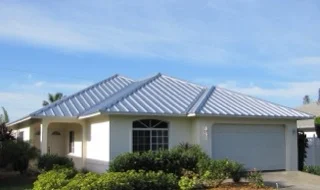
Metal Roofing
Recyclability: Excellent
Metal is the most recyclable roofing material. Steel and aluminum are infinitely recyclable without degradation. Most metal roofing contains 25-95% recycled content, and 100% of it can be recycled at end of life.
Additional sustainability benefits:
- 50+ year lifespan reduces replacement cycles
- Often installed over existing roofs, reducing tear-off waste
- Reflects solar heat, reducing energy consumption
- Lightweight, reducing transportation environmental impact
TPO and PVC Membranes
Recyclability: Good
Both TPO and PVC can be recycled. Some manufacturers have take-back programs that reclaim old membrane for recycling into new products. In practice, recycling programs vary by region and manufacturer.
- TPO is particularly recyclable as a thermoplastic
- PVC recycling is more complex but possible
- White surfaces reduce cooling energy use
Slate and Clay Tile
Recyclability: Limited, but highly sustainable
Natural stone and fired clay aren't 'recycled' in traditional sense, but:
- 100+ year lifespan means minimal replacement
- Natural materials without chemical processing
- Often salvaged and reused in restoration projects
- Can be crushed for aggregate at end of life
Concrete Tile
Recyclability: Limited
Concrete tile can be crushed and used as aggregate but isn't typically recycled back into roofing products.
- Long lifespan (75+ years) reduces waste generation
- Made from abundant natural materials
- Can be crushed for road base or fill
EPDM Rubber
Recyclability: Emerging
EPDM recycling is developing. Old membrane can be ground and used in rubberized products like playground surfaces, though this isn't widespread.
- Long lifespan reduces replacement cycles
- Some products contain recycled tire rubber
Materials Using Recycled Content
Cellulose Insulation
Contains 80-85% recycled newspaper. One of the most environmentally responsible insulation options.
Recycled Content Shingles
Some manufacturers produce shingles containing post-consumer recycled materials, though this remains niche.
Composite Roofing
Many composite products (synthetic slate, rubber shingles) use recycled rubber or plastic content.
The Asphalt Shingle Challenge
Traditional asphalt shingles are problematic environmentally:
- Largest roofing waste source by volume
- Complex composition makes recycling difficult
- Recycling into road paving exists but isn't universal
If using asphalt shingles, ask about local recycling programs. Some areas have facilities that process shingle waste into road paving material.
Making Sustainable Choices
Beyond material selection, consider:
Longevity: A roof that lasts 50 years generates half the waste of one lasting 25 years
Energy efficiency: Reflective roofing reduces lifelong energy consumption
Local products: Reduced transportation impact
Roof-over installation: Metal can sometimes be installed over existing shingles, eliminating tear-off waste
Proper maintenance: Extending roof life through care reduces replacement frequency
Practical Recommendations
For environmentally conscious homeowners, I typically recommend:
- Metal roofing if budget allows—longest life, fully recyclable, energy efficient
- TPO or PVC for flat roofs—recyclable, energy efficient, long-lasting
- Quality shingles with recycling if asphalt is chosen—seek local recycling options
- Consider longevity in your decision—the least wasteful roof is one that lasts
At Pro Specialty Services, we can discuss the environmental aspects of your roofing options. We offer metal roofing, TPO, and other sustainable choices for homeowners who prioritize environmental responsibility.
Caleb Hutchinson
Owner, Pro Specialty Services
"When homeowners ask about environmental options, I'm honest: the most sustainable choice is usually the longest-lasting one. A metal roof that lasts 60 years beats three asphalt roofs environmentally, even if the asphalt gets recycled. Think lifecycle, not just materials."